
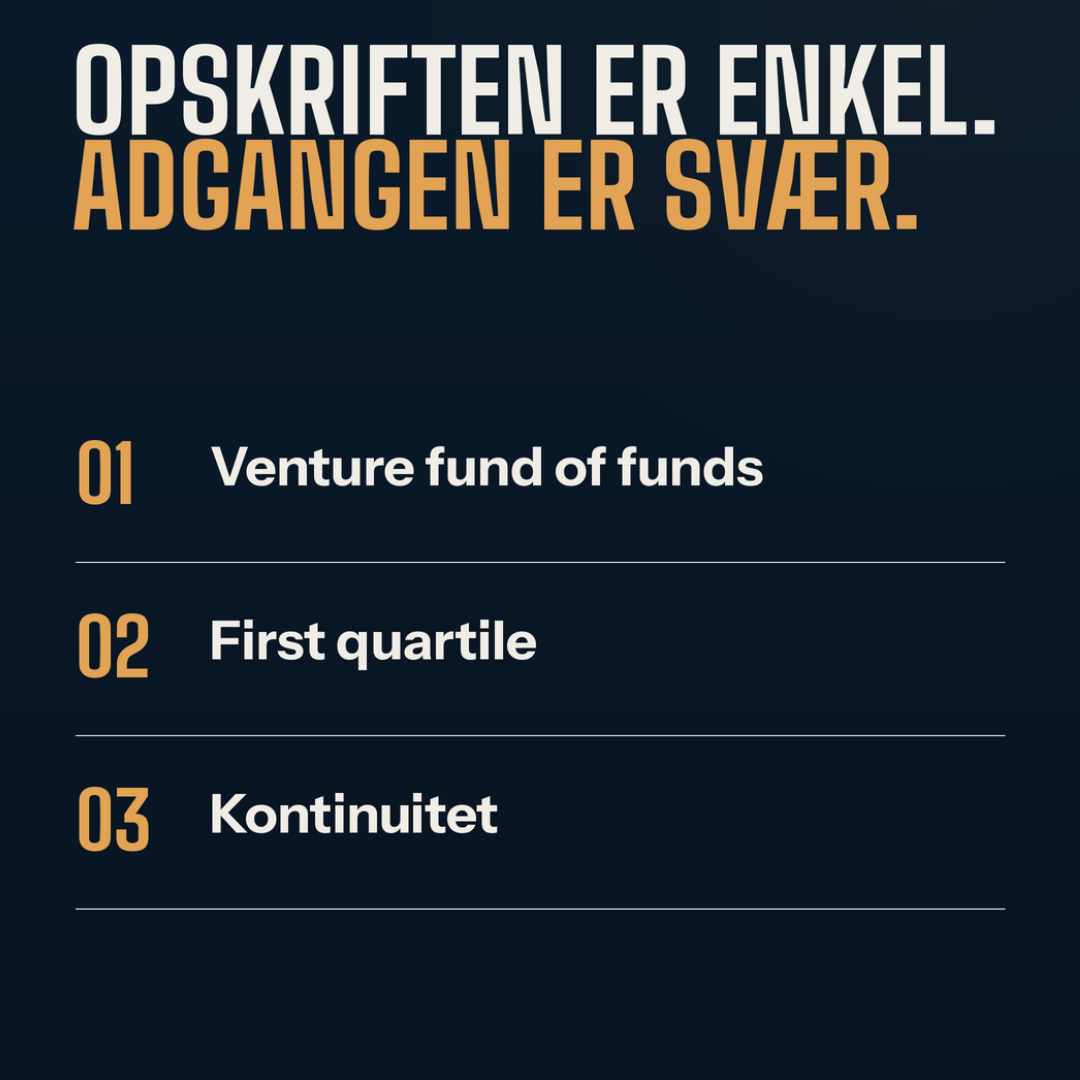
Three keys to successful venture investments
1 September 2026
What if you could only choose one venture capital fund? At Nordic Bloom, we are asked from time to time which venture fund we would choose if we could only choose one fund?
The question is undoubtedly asked because of our general investment philosophy within venture, which is fundamentally inspired by the Yale Endowment model. According to this model, investments are typically made in around 15 venture funds at one time.
In short, the Yale Endowment model is about achieving attractive risk-adjusted returns through investing in 1) venture fund of funds, 2) provided that these have access to underlying so-called ”first quartile” venture funds, and 3) the investments are made continuously over a number of years.
The answer is simple: If we could only choose one venture fund, we would choose Y Combinator (”YC”). We have now been doing this for over five years. With a view to achieving attractive risk diversification, we will also continue to invest according to the Yale Endowment model.
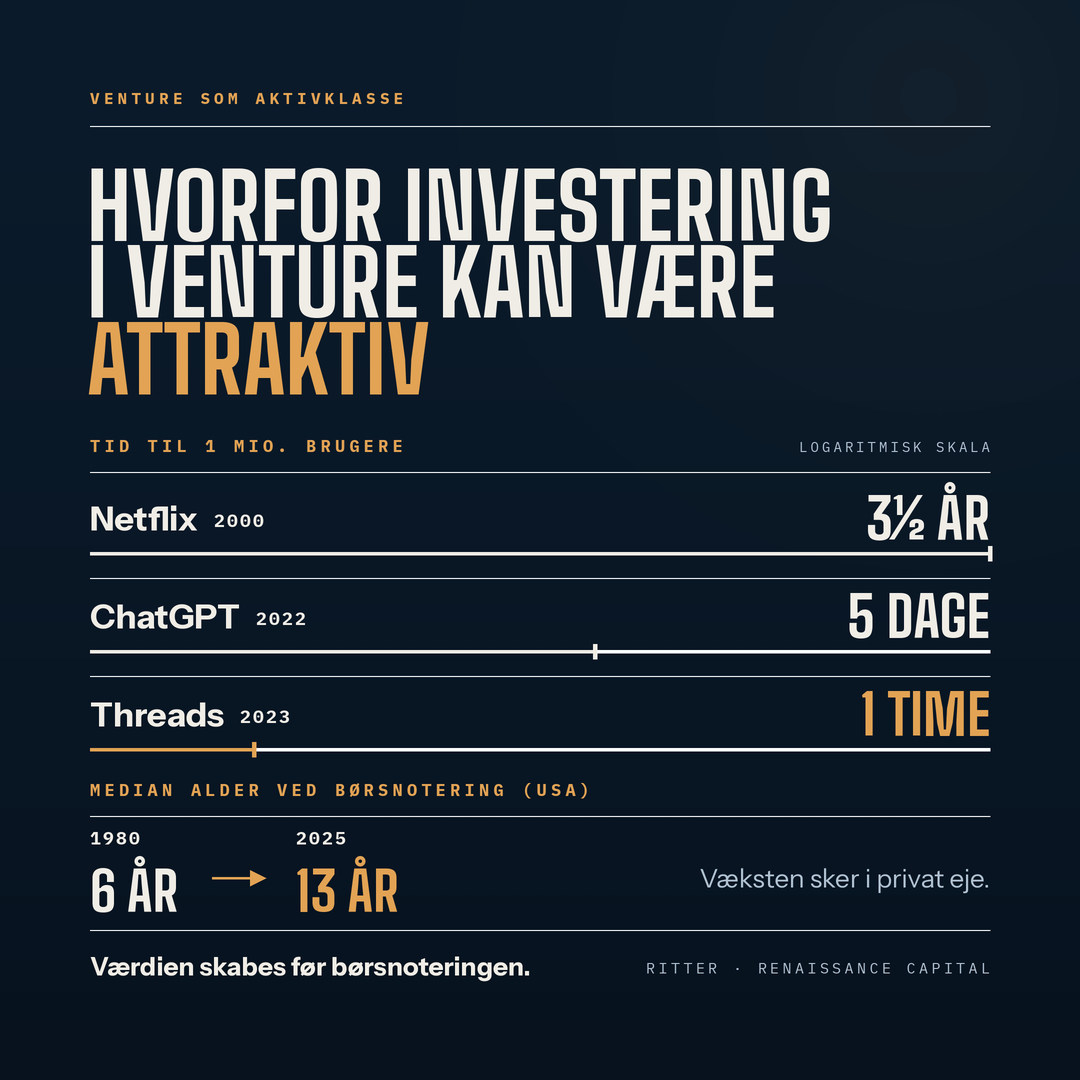
Why? Because since 2012 they have seed financed 20% of all Silicon Valley unicorns with a value of over USD 5 bn. More than any other venture fund. Historically, the YC unicorn rate with a value of over USD 1 bn. has been 3 times greater than non-YC startups. Crucially, even the worst-performing quartile has achieved a return of 3.6x, whilst their first quartile has achieved a return of 8x*). How? When you ask YC, it is about focusing on the team in their selection process. Out of around 70,000 applicants annually, they select about 1%, meaning approx. 700 startups. When you then ask YC what they do besides injecting capital, they answer ”networking effects”, meaning they provide an exceptional network that can support a startup team that may for the first time be developing an innovative company to become truly valuable.
So what does it take to get into the top quartile, which historically has achieved an 8x return? For more than 5 years, we have invested alongside our partner, Rebel Fund. Led by their managing partner Jared Heyman, and using, among other things, their Theorem 5.0 AI/ML algorithm containing millions of data points on what it takes to achieve success as a startup, along with their ”unicorn advisory board”, they have selected those they see as the top permille of all annual applicants—approx. 70 per year in each fund with a three-year investment period.
So do we end up in the top quartile? Naturally we don't know that, but a good start is half the battle, as they say. As can be seen, every little helps...
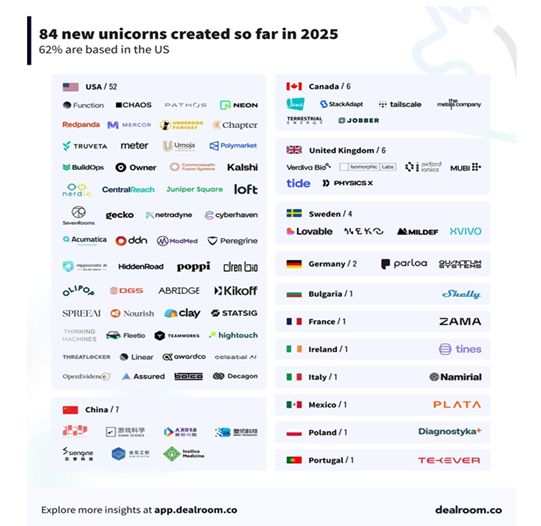
Quite interestingly, according to this data, around 20% of Series A investments will be made in companies that achieve unicorn status. That is why we have secured the opportunity to allow 25% of our investments in our seed funds to go towards the seed-funded companies in the fund that also secure a Series A investment. In conclusion, I would like to quote YC Managing Partner Jared Friedman: “The next few years might go down in history as the best period to invest in technology or to be a technologist”. Since over 90% of all YC startups today are so-called ”AI native”, I will end with another quote from him, namely: ”You can imagine a single founder with AI tools and a good inference budget building a billion-dollar company”.


DKK 750,000 is the legal minimum amount to invest in this type of fund. This is a requirement to ensure that investors are qualified and understand the level of risk.
No, you are free to choose to invest a higher amount if you wish. However, the total size of the fund is a natural limit and allocation is on a first-come, first-served basis.
Payments are made on an ongoing basis as the fund makes its investments - typically spread over 3-4 years. For example, a total investment of DKK 1 million can be distributed in instalments of DKK 250,000-350,000 annually, depending on the structure of the fund.
Payouts typically begin 1-2 years after the investment period has ended, i.e. in year 4 or 5. The timing and amount depend on the fund's performance, market development and other conditions. There is no guarantee of return and the investment should be viewed as long-term.
Some funds have a lifespan of 6-8 years, while others can last up to 14 years.
 English
  Danish